
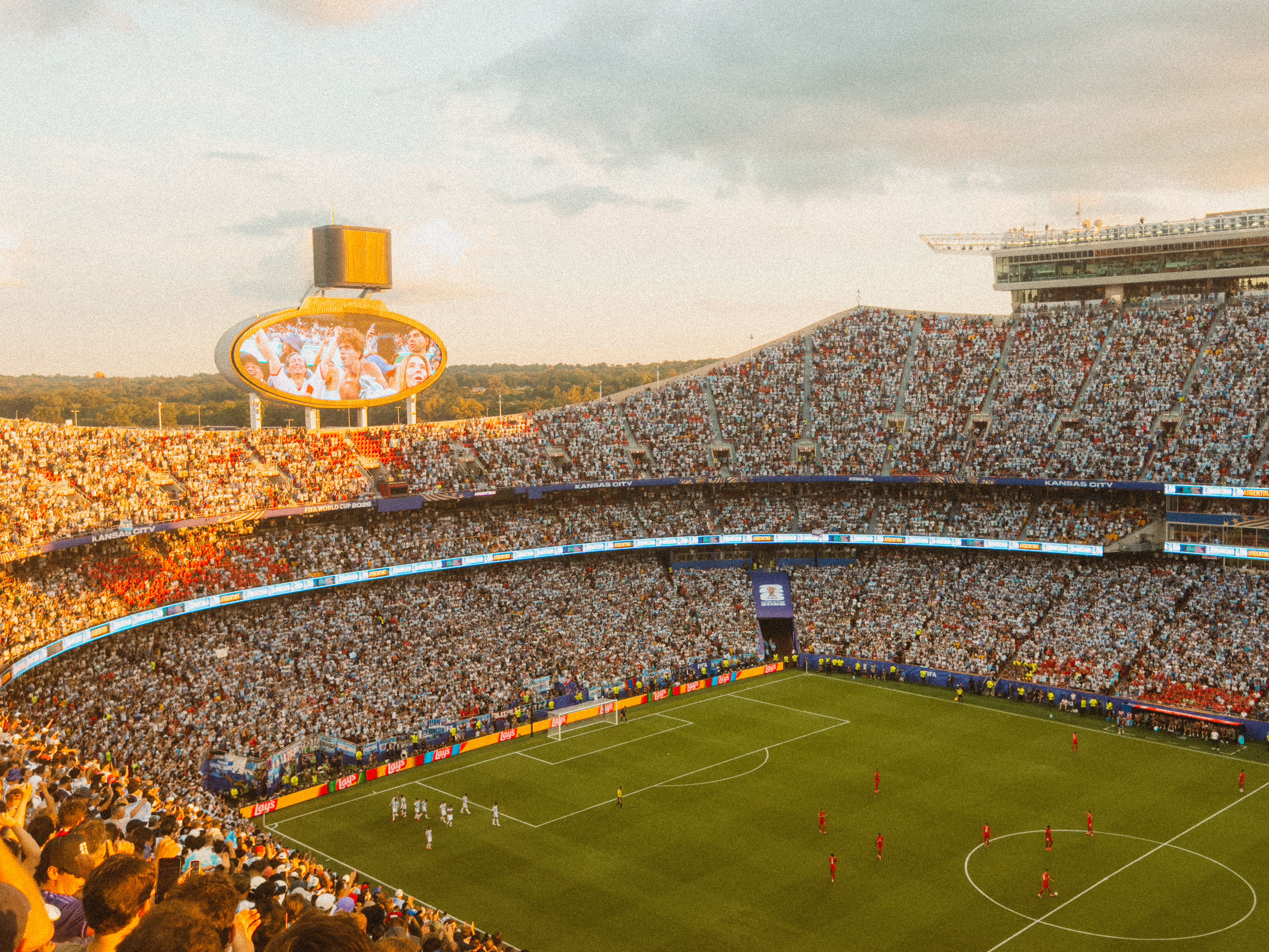
Professional seasons now stretch across more of the year than they once did, with expanded competitions and additional international windows. The expansion is driven by revenue and enabled by fragmented authority.
Every extra fixture has a price attached
Broadcast contracts are negotiated on the number and quality of matches delivered, so adding fixtures increases the value of the rights package directly.
Additional matches also produce ticket sales, hospitality, sponsorship activation and merchandise, none of which require new stadiums or new teams.
The marginal cost of one more fixture is low relative to the revenue, which makes expansion the obvious move for whichever body controls the competition.
Authority over the calendar is split
Clubs employ the players, leagues organise domestic competition, confederations run continental tournaments and international federations run global ones.
Each body can expand its own competition without needing agreement from the others, and each has revenue reasons to do so.
Nobody holds responsibility for the total load a player carries across all competitions, which is why the aggregate grows even when every individual decision looks defensible.
Global audiences reward a longer calendar
Broadcasters in distant markets want content across as much of the year as possible, and a compressed season leaves long gaps in their schedules.
Pre-season tours, off-season exhibitions and neutral-venue fixtures fill those gaps and open sponsorship markets in regions with no local team.
That has turned the summer break in many sports into a commercial period rather than a rest period.
Players bear the cost of the expansion
Injury risk rises with accumulated load and inadequate recovery, and the players most in demand are the ones playing in every additional competition.
Player associations have begun litigating and threatening industrial action over calendar decisions, which is a recent development in sports where they were historically weak.
Squad rotation is the clubs' answer, and it shifts the problem rather than solving it, since a rotated match is a weaker product for the broadcaster who paid for it.
Expansion has a self-limiting mechanism
Rights values depend on scarcity as well as volume, and a match that once felt significant becomes ordinary when there are many more of them.
Attendance at less important fixtures falls first, which is visible to broadcasters and eventually feeds into what they will pay.
The limit arrives when the additional fixture reduces the value of the existing ones by more than it earns, and several competitions appear to be testing where that point sits.